How-To
Humidity-Proof Hair Routine — Step by Step
Full wash-day and styling sequence to block moisture at the cuticle when relative humidity rises.
Frizzy Hair
Humidity · Updated July 2026
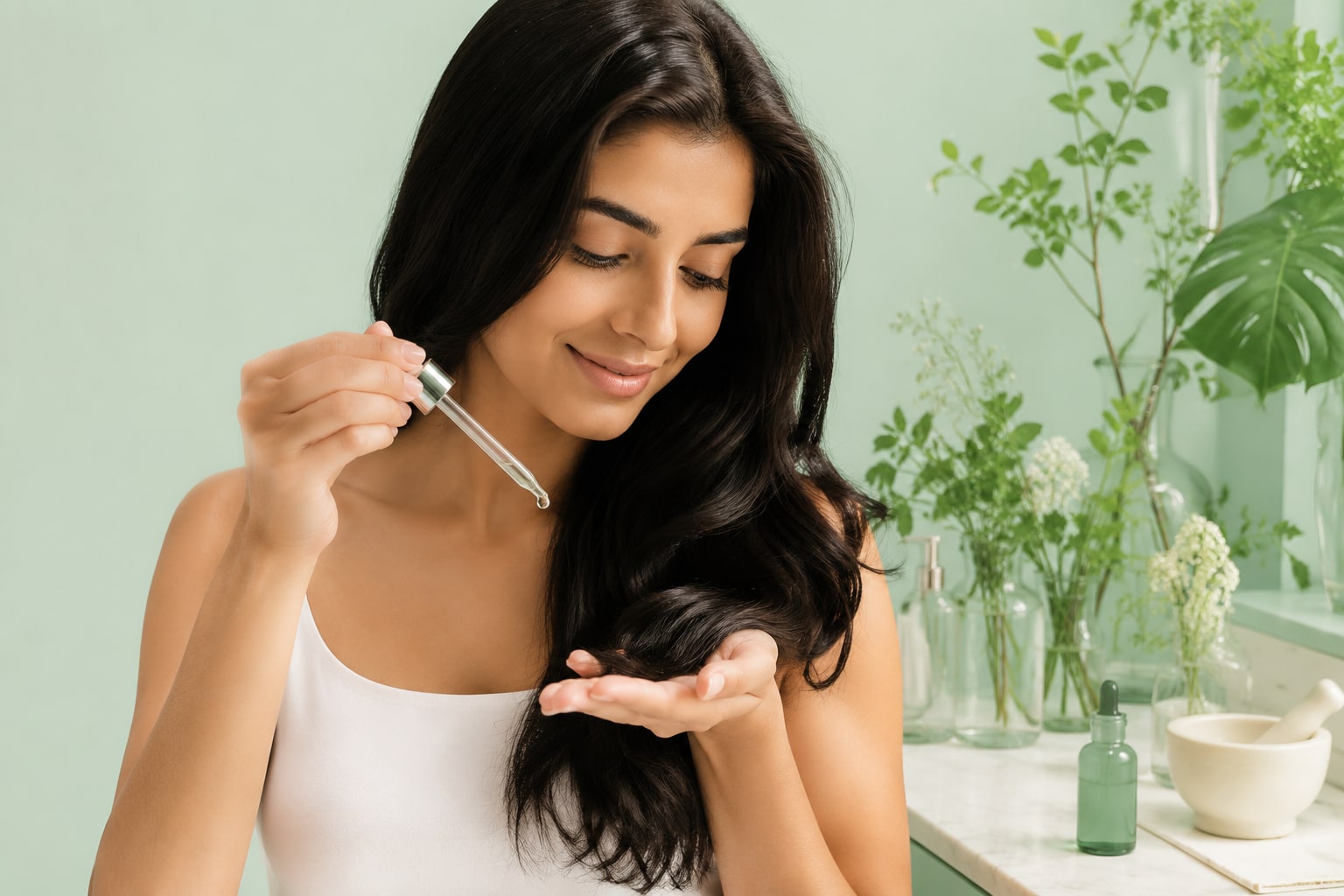
Manage halo frizz and root puff on straight hair when humidity rises. Cuticle sealing without losing sleekness.
Frizz happens when the cuticle layer lifts and allows water vapor into the cortex, swelling the strand from within. On straight hair, you rarely lose curl definition—you get halo frizz at the crown, unexpected root volume, and a rough, dull cast along the surface. The moisture-exchange mechanism is the same as on curly hair; the presentation is different because straight strands lie flat and show surface disruption more evenly.
Your goal is a smooth, closed cuticle along the full length without triggering grease at the roots or stiffness at the ends.
Straight strands align parallel when the cuticle lies flat. Humidity disrupts that alignment in two ways:
Surface lift — Cuticle scales that are already raised from heat styling or mechanical damage catch water molecules. The strand diameter increases microscopically, creating friction between neighboring hairs.
Short-strand halo — New growth and breakage around the face and crown have less weight to stay down. They absorb humidity quickly and stand away from the head.
Damage from flat irons and curling wands is a frequent hidden cause. Even if your lengths look sleek, compromised mid-shaft cuticles will puff the moment relative humidity climbs.
Learn how heat affects the cuticle in our heat styling damage guide.
For product education without duplicate roundup pages, browse our serums category guide.
A proper blow-dry closes cuticles more effectively than air drying in humid climates. Use a concentrator nozzle, section hair, and dry roots first. Finish with a cool shot to set the outer layer.
If you prefer air drying, stay in a climate-controlled space until hair is fully dry. Partially damp hair plus outdoor humidity is the most common straight-hair frizz trigger.
Compare techniques in air dry vs diffuser if you are weighing options.
Light serums with dimethicone or specialized humidity-blocking polymers perform well on straight textures. Creams can work on thick straight hair but often overwhelm fine straight strands.
Avoid layering multiple silicone products without clarifying periodically—buildup makes hair look dull and can paradoxically increase frizz when the coating cracks.
Friction during sleep lifts cuticles. A silk pillowcase or loose braid reduces halo frizz on day two. In the morning, a single drop of serum on palms, pressed over the surface, revives smoothness without a full restyle.
For overnight protection routines, see overnight frizz protection.
Straight hair humidity frizz is lifted cuticles and light broken hairs catching atmospheric moisture. Seal on damp hair, dry completely before exposure, protect from heat damage, and keep product weight appropriate to your density. Fix the cuticle first; the sleek finish follows.
Frizz control improves when you treat each wash cycle as a controlled experiment rather than a new product hunt. Hold technique, timing, and dose constant for at least three cycles while changing only one variable—gel amount, dry method, or overnight protection. Note weather, indoor humidity if known, and how hair looked at four hours and end of day. Patterns emerge faster than switching bottles weekly.
Working routines show reduced styling time, fewer mid-day touch-ups, and frizz that stays localized (ends only) rather than global puff. If frizz shrinks but returns at the same time daily, check environmental triggers—commute humidity, gym showers, or office HVAC—before blaming product failure.
Persistent breakage, patchy hair loss, or sudden texture change after chemical service needs stylist or dermatologist input—not more anti-frizz serum. Trims every eight to twelve weeks remain part of maintenance even when routines stabilize; split ends cannot be sealed permanently at home.
Shorter face-framing layers frizz first in humidity because they move more and absorb vapor faster. Smooth with round brush during blow-dry; micro-serum on dry bangs only. Avoid touching bangs throughout day—skin oil plus humidity worsens separation.
Tight ponytails stress hairline hairs into breakage flyaways that humidity amplifies. Looser low pony with serum on tail reduces dual stress. Silk scrunchie minimizes cuticle chip at tie point.
Short or broken hairs around the crown and hairline have lifted cuticles that absorb moisture independently of your main length. Humidity makes them stand away from the head, creating a fuzzy ring.
Yes. The shaft expands and surface cuticles lift, producing puff and roughness while the overall pattern stays straight. It often looks like volume you did not ask for.
Blow-drying with a concentrator and cool finish can smooth cuticles if you use heat protectant. Walking outside with damp hair in humidity guarantees frizz.
No. Consistent sealing routines, gentle cleansing, and humidity-blocking serums manage most straight-hair humidity frizz without chemical smoothing services.
Weekly frizz fixes — no spam.
Full wash-day and styling sequence to block moisture at the cuticle when relative humidity rises.
Learn what serums do at the cuticle, key ingredients for frizz, and when to see product picks on Hair Serums.

The science of how water vapor swells hair through the cuticle and disrupts hydrogen bonds in the cortex.